
Why Did The OCC Reject Wise?
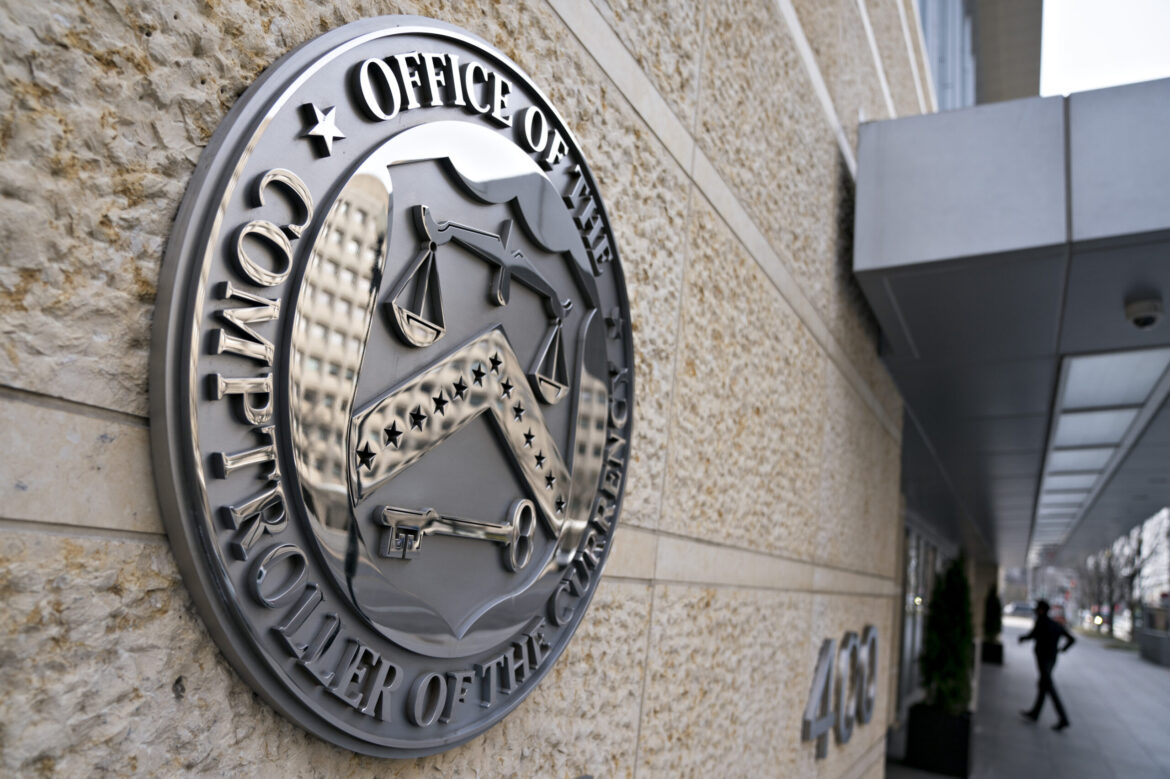
The Office of the Comptroller of the Currency’s rejection of Wise’s U.S. national trust bank application has turned an approval-heavy fintech charter cycle into a clearer test of what digital-asset and payments companies must prove before gaining federal banking status.
The OCC denied Wise’s application on July 21, 2026. Wise had proposed creating Wise National Trust in Austin, Texas, offering multi-currency stored-value accounts, payment processing and fiduciary services while relying heavily on the company’s existing U.S. and global infrastructure.
The central issue was financial-crime compliance. After reviewing Wise’s history, information from U.S. and foreign regulators and the proposed bank’s controls, the OCC said it “cannot conclude the proposed national trust bank will have an effective AML/CFT compliance program for conducting business in the U.S.” until existing shortcomings were addressed and an enhanced enterprise-wide program was operating.
The regulator made clear that a past enforcement action alone does not automatically disqualify an applicant. Instead, Wise failed to convince the OCC that weaknesses elsewhere in the group had been sufficiently fixed for a federally supervised bank.
How Did AML Weaknesses Affect The Charter Decision?
The OCC identified four connected problems covering legal compliance, management knowledge, leadership competence and fiduciary experience. AML and counter-terrorist financing controls ran through several of them.
Wise US entered a multistate consent order in July 2025 covering weaknesses in suspicious-activity investigations and reporting, transaction-monitoring data integrity, late suspicious activity reports, independent review and remediation. It also agreed to a $4.2 million administrative penalty.
The OCC was also unconvinced that the proposed directors and managers had enough experience with national banking requirements or the financial-crime risks attached to Wise’s planned activities. It classified the proposed business as carrying high inherent money-laundering, terrorist-financing and illicit-finance risks.
The fourth issue involved fiduciary banking. Wise US had no historical fiduciary business, and the OCC concluded that the proposed leadership had not shown enough experience with the fiduciary obligations of a national bank.
The practical lesson is that applicants cannot rely on receiving a charter first and completing bank-grade remediation later. The OCC expects AML, sanctions, governance and risk systems to be ready before approval.
Investor Takeaway
The Wise decision does not show that the OCC is turning against fintech or crypto banks. It shows that commercial scale and technology are not enough if the regulator believes financial-crime controls, management experience or group-wide governance still fall below national-bank standards.
Which Crypto Applicants Face The Same Test?
The decision matters because several digital-asset companies remain in the OCC charter pipeline. EDX Trust, Payward National Trust Company, Agora National Trust Bank and Catena Trust Bank are among the pending applicants, although there is no evidence that any share Wise’s specific compliance deficiencies.
The exposure is instead structural. Each applicant must prove that its AML, sanctions, governance and fiduciary systems can support a federally regulated banking business from the start.
Payward is especially relevant because its parent operates Kraken across spot trading, derivatives, staking, margin and other digital-asset products. Its application identifies a proposed chief compliance and risk officer with more than 15 years of compliance and financial-crime experience and includes dedicated BSA/AML and sanctions policies.
EDX Trust has also built financial-crime controls directly into its application, including customer screening, AML and OFAC risk assessments, blockchain analytics, independent testing and model validation. Its proposed compliance officer has served as a BSA officer at regulated financial institutions since 2013.
Agora and Catena add another test because stablecoin issuance, custody and cross-border settlement can create many of the same financial-crime and fiduciary concerns that influenced the Wise decision.
Why Does Circle Matter For The OCC’s Message?
The contrast with successful applicants shows that the OCC is not broadly rejecting digital-asset banking models. In December 2025, the regulator conditionally approved national trust bank applications involving Circle and Ripple, along with conversions for BitGo, Fidelity Digital Assets and Paxos.
Circle received final approval on July 10, 2026, allowing First National Digital Currency Bank, N.A. to begin operating as Circle National Trust. Wise’s rejection followed less than two weeks later.
The OCC then denied Bunq US Bank on August 4 over a different set of concerns involving capital support, unsecured-credit assumptions, profitability and management experience. Together, the decisions show that approvals are available, but applicants must demonstrate operational readiness rather than rely on future fixes.
What Would A Successful Wise Resubmission Require?
Wise said on July 24 that it plans to submit another application under the GENIUS Act framework and argued that its compliance program has changed materially since its original filing. No second Wise application appears on the OCC’s public pending register as of August 12.
The regulator explicitly left the door open, saying Wise is not prohibited from filing another de novo charter application. Any new submission, however, is expected to address the reasons for the denial.
That makes the Wise case more than a company-specific setback. For the next group of crypto and fintech applicants, the OCC has established a practical threshold: compliance systems must already operate at the level expected of a national bank, management must understand the risks being supervised and weaknesses elsewhere in the corporate group can affect the charter decision.
The charter race is therefore no longer only about which digital-asset companies can persuade regulators that their business models belong inside the banking system. They must also prove that the controls behind those businesses are ready before the license arrives.